

Have you ever noticed that the tires on the same vehicle don’t always wear at the same rate? For EVs, battery weight, drivetrain configuration, driving behavior, and tire position can all influence how wear develops.
Understanding these patterns can provide insight into how the vehicle delivers power and manages load. It can also help drivers spot uneven wear, alignment or inflation issues, and know when maintenance may be needed.
Why EVs Put More Load on Tires
Battery packs add substantial mass to an electric vehicle, increasing the overall load that tires must support.
Acceleration, braking, and cornering can shift weight between the front and rear axles and between the inside and outside tires. Regenerative braking can also influence how braking forces are distributed through the driven wheels during deceleration. Over time, these conditions can contribute to differences in tread wear.
For EV-specific tires, load capacity is only part of the equation. Casing and sidewall construction, tread compound, and tread design must work together to balance durability, efficiency and performance.
How Instant Torque Influences Tire Wear
An electric motor can deliver torque almost immediately, sending power directly to the driven wheels. This can increase longitudinal forces at the tire during acceleration, particularly when drivers use strong throttle inputs.
A 2025 study presented at the KSAE Spring Conference found that EVs generated approximately 12% higher torque during acceleration and 14% more during deceleration than comparable internal-combustion vehicles. In controlled testing, increasing torque by approximately 50% was associated with a 20% reduction in tire-wear performance.
These findings highlight why EV tire design must balance torque, grip, heat, and tread durability. The actual effect on tire life varies with vehicle configuration, tire compound, traction control, road conditions, and driving behavior.
Reading Common EV Tire Wear Patterns
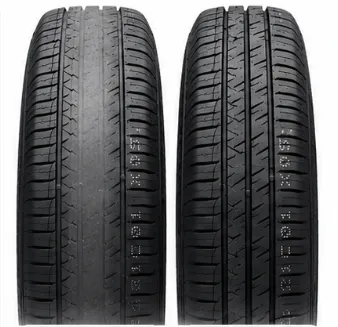
Tread wear can reveal how a tire is performing, and where wear occurs can be just as important as how much tread remains.
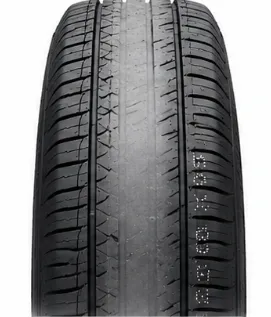
Center Wear
Excessive wear concentrated in the center of the tread can be associated with overinflation. Maintaining the vehicle manufacturer’s recommended pressure helps promote more even tread contact.
Shoulder Wear
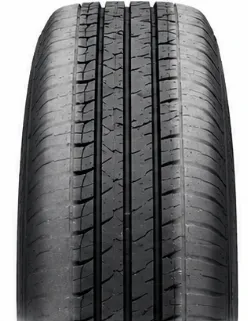
Wear concentrated along the shoulders can be associated with underinflation or other factors that change how the tread contacts the road. If both shoulders show noticeably greater wear than the center, the tire should be inspected.
One-Sided Wear
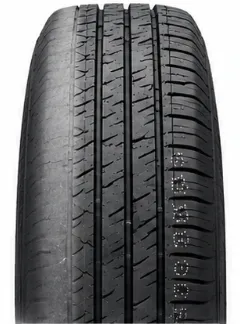
When one side of the tread wears faster than the other, alignment can be a contributing factor. Camber and toe settings affect the angle at which the tire meets the road and can create uneven contact across the tread.
Cupping or Scalloped Wear
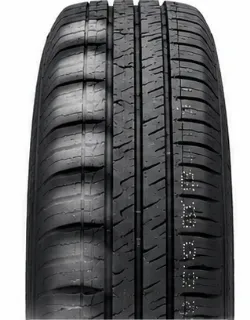
Alternating high and low spots around the tread can indicate irregular contact with the road. Suspension components, wheel balance, alignment, or tire-related factors can contribute to this type of wear and should be inspected if it appears.
Front-to-Rear Differences
Different axles can experience different workloads depending on the vehicle’s drivetrain and weight distribution. Comparing tread depth across all four tires can help identify whether one axle is wearing significantly faster than the other.
Why Tire Rotation Is Especially Important for EVs
Tire rotation matters most when different tires carry different workloads.
A front-wheel-drive (FWD) EV requires the front tires to handle steering and propulsion, in addition to braking forces, so the front axle may wear faster.
A rear-wheel-drive (RWD) EV places more of the propulsion workload on the rear tires. All-wheel-drive (AWD) systems can distribute torque across multiple axles, with the balance varying by vehicle and driving conditions.
Without regular rotation, these differences can lead to uneven tread wear between axles. Following the vehicle or tire manufacturer’s recommended rotation schedule helps distribute wear more evenly across the tire set while providing an opportunity to identify irregular wear, pressure issues, or other potential concerns early.
Designed Around the Demands of EVs
EV-specific tire design also plays an important role in managing these demands. EV tires need to balance load capacity, tread durability, and rolling resistance to support the added weight and power characteristics of electric vehicles while maintaining efficiency and long-term performance.
ERANGE EV tires are engineered specifically for electric vehicles and hybrids, combining increased load-bearing capacity, reinforced sidewalls, EV-focused tread design, and advanced rubber compounds to manage the demands of electric driving. EcoPoint³ Technology helps support energy efficiency and tread performance while using more environmentally conscious materials and manufacturing practices.
Know What Your Tires Are Telling You
Tire wear is more than an indication of mileage. The pattern, location, and rate of tread wear can provide insight into how a tire interacts with the vehicle, drivetrain, and road.
Understanding how EVs wear tires differently gives drivers a better way to look beyond tread depth and stay ahead of routine tire maintenance.